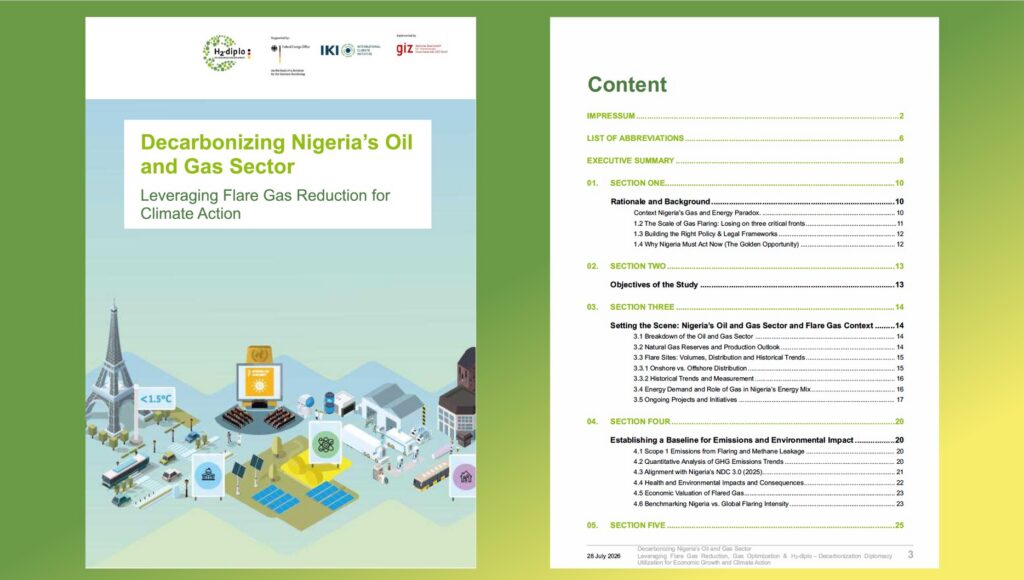
The H2-diplo Office Nigeria has launched the study “Decarbonizing Nigeria’s Oil and Gas Sector: Leveraging Flare Gas Reduction for Climate Action,” highlighting pathways to reduce gas flaring, strengthen gas utilization and unlock new economic value while supporting Nigeria’s climate and energy-transition ambitions.
The study examines how Nigeria can reduce gas flaring while unlocking greater economic value from its natural gas resources. It focuses on three interconnected pathways: flare gas reduction, gas optimization and gas utilization, highlighting opportunities to improve gas recovery, strengthen infrastructure and convert previously wasted gas into productive applications.
The report also explores the potential to connect flare-gas reduction with emerging hydrogen pathways, highlighting opportunities to leverage Nigeria’s existing gas resources and infrastructure in support of broader decarbonization and energy-transition objectives.
Key barriers identified include infrastructure gaps, financing constraints, technology deployment challenges and the need for an enabling regulatory environment. The study therefore emphasizes the importance of coordinated action involving government institutions, regulators, industry, investors and development partners.
The findings provide practical insights for policymakers, industry stakeholders, development partners and investors, and will support continued technical dialogue and stakeholder engagement under the Flare4Value initiative.
The study contributes to ongoing German–Nigerian cooperation on climate action and energy transition, supporting efforts to transform gas flaring from an environmental challenge into an opportunity for emissions reduction, economic value creation and sustainable industrial development.
It is available here: Flare4Value Report
For more news about the H2-diplo activities, follow us on LinkedIn: H2-diplo – Decarbonization Diplomacy | LinkedIn