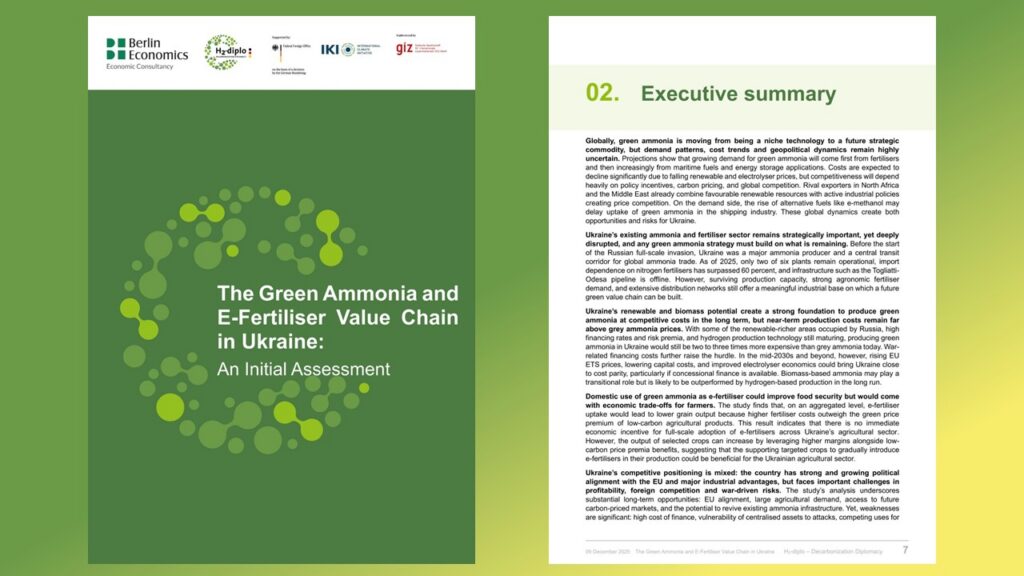
The H2-diplo Office Ukraine has released the study “The Green Ammonia and E-Fertiliser Value Chain in Ukraine: An Initial Assessment”, developed by international and Ukrainian experts from Berlin Economics. The study examines how Ukraine can build on its remaining ammonia industry, strong agricultural base, and renewable energy potential to develop a future green value chain.
Set against evolving global market dynamics, the analysis highlights that while green ammonia demand is expected to grow, initially in fertilisers and later in shipping and energy storage, Ukraine faces strong international competition and significant cost challenges in the near term. Today, green ammonia production remains substantially more expensive than conventional alternatives, particularly due to war related risks, high financing costs, and immature hydrogen technologies.
At the same time, Ukraine retains important structural advantages, including existing production assets, large domestic fertiliser demand, and alignment with EU markets. In the longer term, falling renewable and electrolyser costs, alongside rising EU carbon prices, could improve competitiveness and open opportunities for integration into European value chains.
The study finds that green ammonia and e-fertilisers could play a role in Ukraine’s green reconstruction, but stresses that development should be gradual, targeted, and closely aligned with EU frameworks. Early priorities include feasibility assessments, improving investment conditions, workforce development, and advancing regulatory alignment, while avoiding premature large-scale investments in a high-risk environment.
The study is available here in English and Ukrainian.
For more news about H2-diplo activities, follow us on LinkedIn: H2-diplo Decarbonization Diplomacy | LinkedIn.