Future Forum Green Hydrogen 2026: Strengthening Europe’s Competitiveness in the Global Hydrogen Race

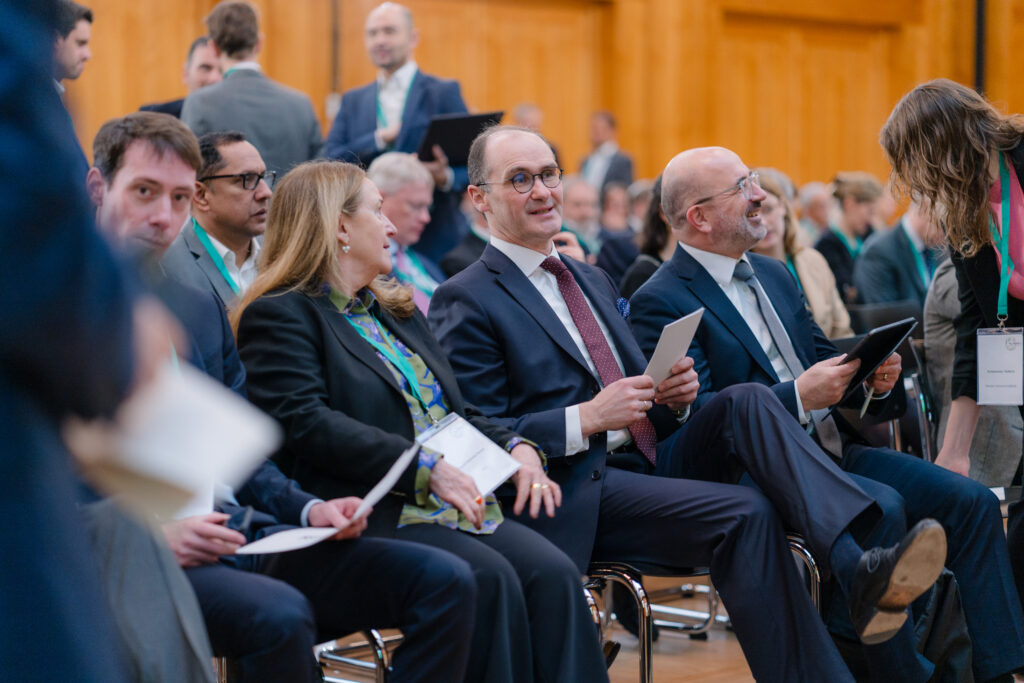
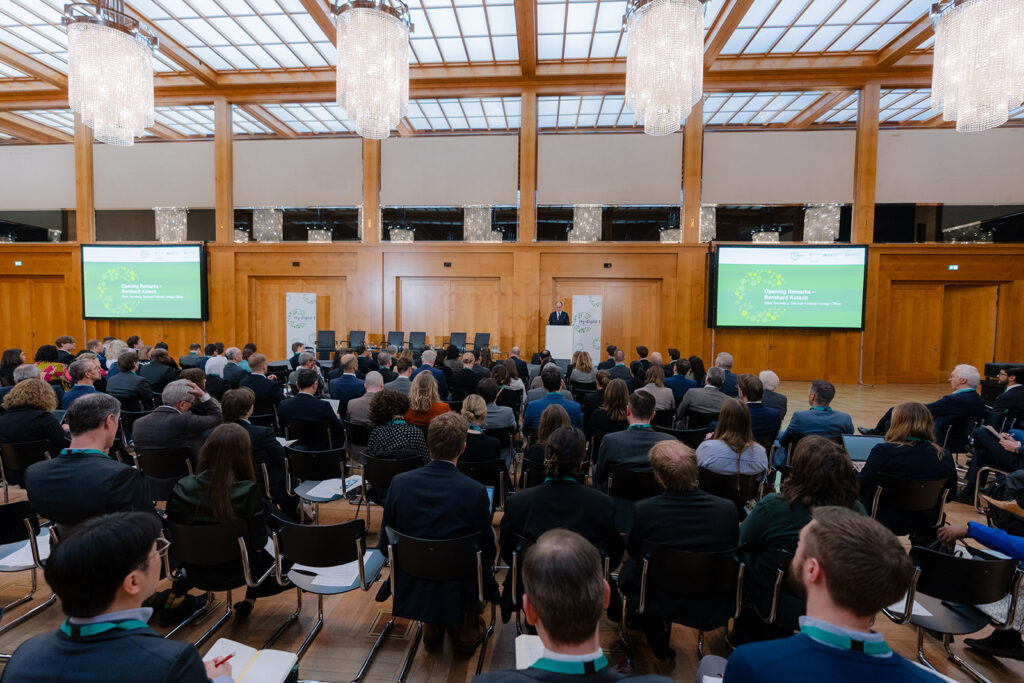
H2-diplo hosted the the fourth edition of the Future Forum Green Hydrogen (FFGH) under the auspices of the German Federal Foreign Office in Berlin. Around 220 policymakers, diplomats, researchers, and private sector representatives came together to discuss how hydrogen can drive economic growth, resilience, and decarbonisation in an increasingly competitive global landscape. For the first time, the forum integrated discussion threads from the Federal Foreign Office, the Federal Ministry for Economic Affairs and Energy, and the Federal Ministry for Economic Cooperation and Development, underlining the ambition to advance a more coherent and well-aligned energy foreign policy.

Bernhard Kotsch, State Secretary at the Federal Foreign Office, and Bernhard Kluttig, Director-General at the Federal Ministry for Economic Affairs and Energy, opened the forum.

In his remarks, Kotsch emphasised that the core pillars of German foreign policy — security, freedom and prosperity — are closely linked to the energy transition. He stressed that climate protection and energy security must align. He also emphasised the importance of coordinated action across ministries to strengthen Europe’s hydrogen economy. Kluttig highlighted hydrogen’s dual role as a key enabler of decarbonisation and energy sovereignty. Drawing on Germany’s energy transition monitoring, he stressed its importance for achieving climate targets while reinforcing industrial resilience. At the same time, he called for a more pragmatic and flexible approach to the hydrogen ramp-up, including efforts at EU level to simplify regulatory frameworks, reduce administrative burdens, and revisit overly restrictive provisions in the delegated act on renewable hydrogen.
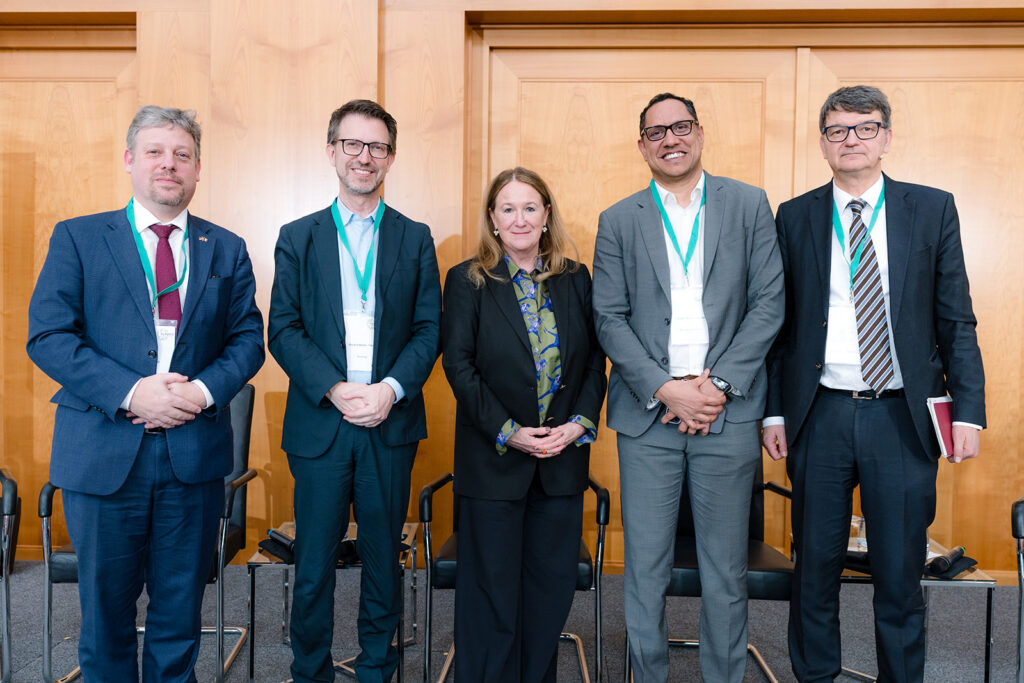
Providing a global perspective, in his keynote Mikaa Blugeon-Mered (Canada Research Chair in Clean Hydrogen) highlighted the accelerating hydrogen race and pointed to strong momentum in China and India. He described the period from 2023 to 2025 as a turning point for market confidence and warned that regulatory uncertainty could weaken Europe’s global influence. In this context, clear definitions and stable frameworks remain essential to provide long-term orientation for international markets and investment decisions.
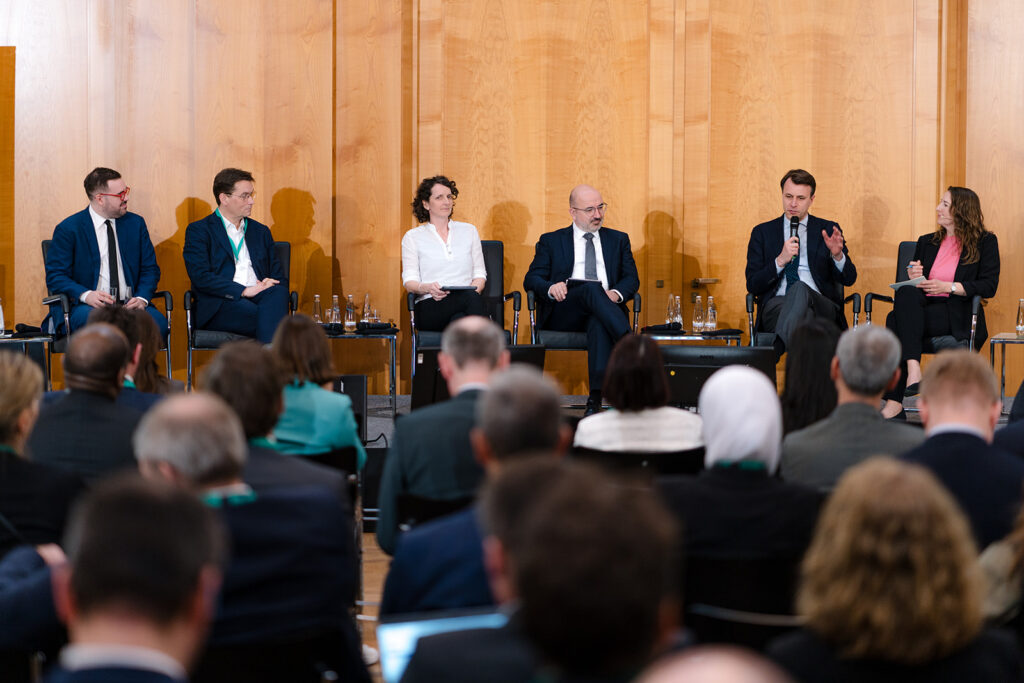
Focusing on hydrogen competitiveness and market dynamics, the first panel, moderated by Kathrin Goldammer (Reiner Lemoine Institute), explored the interplay between industrial policy, decarbonisation, and diplomacy. Christine Falken-Großer (BEE), Nils Aldag (Sunfire), Arno Büx (Gas Infrastructure Europe), Bernhard Kluttig, and Mikaa Blugeon-Mered emphasised that scaling demand and increasing market volumes are critical to closing the cost gap for hydrogen. Speakers also highlighted infrastructure development, regulatory simplification, and demand-side instruments such as quotas or carbon pricing as essential levers for market ramp-up. While views differed on the need for flexibility in hydrogen definitions, there was broad agreement on the importance of stable and predictable regulatory frameworks. Instruments such as ETS, CBAM, and RED III were widely seen as central to creating demand and supporting industrial transformation.
After a networking break, the forum resumed with three parallel sessions, each hosted by a different federal ministry: the Federal Foreign Office, the Federal Ministry for Economic Affairs and Energy, and the Federal Ministry for Economic Cooperation and Development.
The session convened by the Federal Foreign Office, moderated by Gerhard Schlaudraff (Federal Foreign Office), brought together H.E. Piet Heirbaut (Kingdom of Belgium), Tobias Bischof-Niemz (Enertrag), Gautam Reddy Kumbam (AM Green Ammonia), and Ingrid-Gabriela Hoven (GIZ) to explore how foreign policy can enable resilient hydrogen supply chains, with a strong focus on reliable investment conditions, faster permitting, and mutually beneficial international partnerships.

In parallel, the Federal Ministry for Economic Cooperation and Development hosted a session moderated by Evita Schmieg (Federal Ministry for Economic Cooperation and Development), featuring contributions from Gregor Paterson-Jones (GET.invest), Christoph de Beer (SASOL), and Benedikt Messner (Uniper Global Commodities). Discussions centred on Contracts for Difference (CfDs) as a key instrument for hydrogen market ramp-up, highlighting their potential to provide revenue certainty and improve cost-efficiency. The session also marked the launch of a new white paper on CfD mechanisms to support EU strategic renewable hydrogen, developed by the Green Hydrogen Business Alliance in cooperation with GET.invest.

At the same time, the Federal Ministry for Economic Affairs and Energy convened a closed-door session with European technology providers, focusing on the state of play of the sector, the importance of scaling production and strengthening long-term partnerships, as well as the need to balance local content requirements with overall project competitiveness.

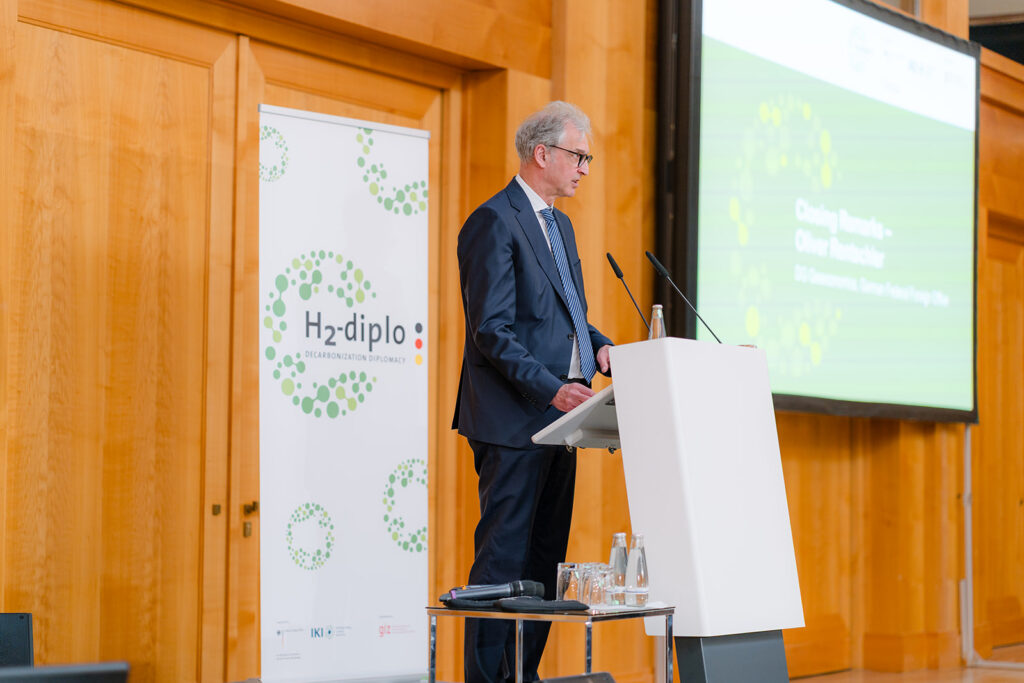
Closing the event, Oliver Rentschler, Director-General for Geoeconomics at the Federal Foreign Office, underlined that hydrogen will remain a central element of the global energy transition. He emphasised that strengthening Europe’s position will require strategic coordination, international cooperation, and decisive action to align competitiveness with decarbonisation while reducing geopolitical dependencies.

The Future Forum Green Hydrogen 2026 reaffirmed hydrogen’s role as both a climate solution and a strategic industrial priority. As global competition intensifies, Europe’s success will depend on its ability to combine clear policy frameworks, strong partnerships, and scalable market mechanisms to build a resilient and competitive hydrogen economy.
We sincerely thank all speakers and participants for their valuable contributions. H2-diplo remains committed to fostering dialogue, strengthening partnerships, and supporting the development of global hydrogen markets.

For more news about the H2-diplo activities, follow us on LinkedIn: H2-diplo – Decarbonization Diplomacy | LinkedIn.

Photo credits: Hanns Schmelzer.

SHARE

Weitere Events

Global

H2-diplo hosted the fourth edition of the Future Forum Green Hydrogen (FFGH) under the auspices of the German Federal Foreign Office in Berlin. Around 220 policymakers, diplomats, researchers, and private sector representatives came together to discuss how hydrogen can drive

Global

H2-diplo, together with the German Embassy in Lisbon and AHK Portugal, hosted a Decarbonization Dialogue with around 65 stakeholders to explore Portugal’s role in advancing a hydrogen economy and strengthening EU energy resilience.

Nigeria

The workshop explored the challenges and opportunities CBAM presents for Nigerian hydrogen exporters, fostering dialogue on policy frameworks, regulatory measures, and potential collaborations with the EU.