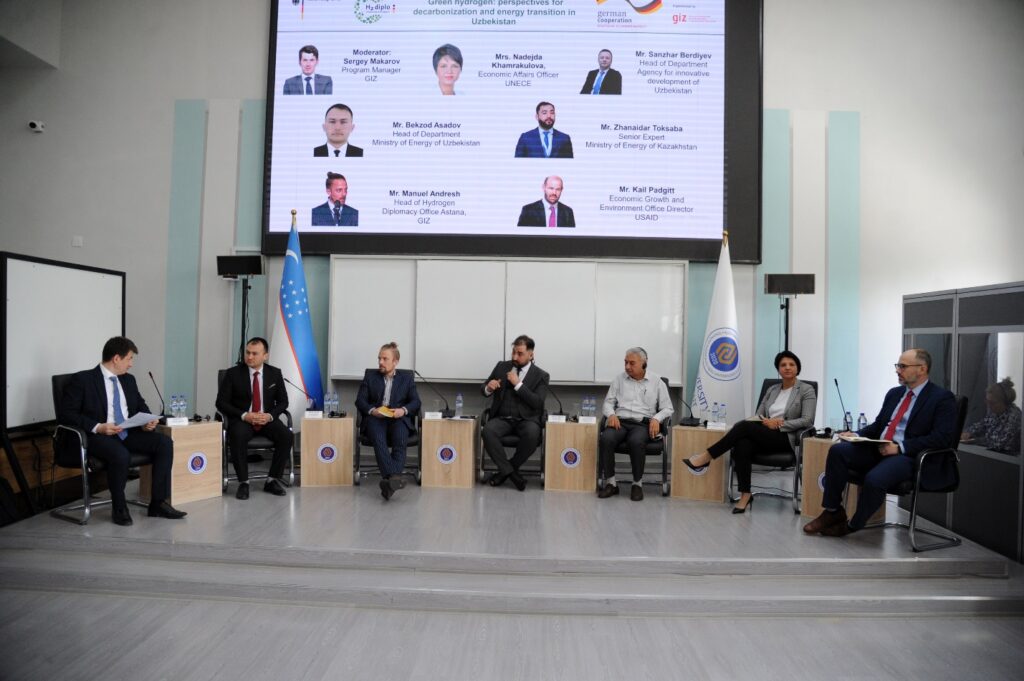
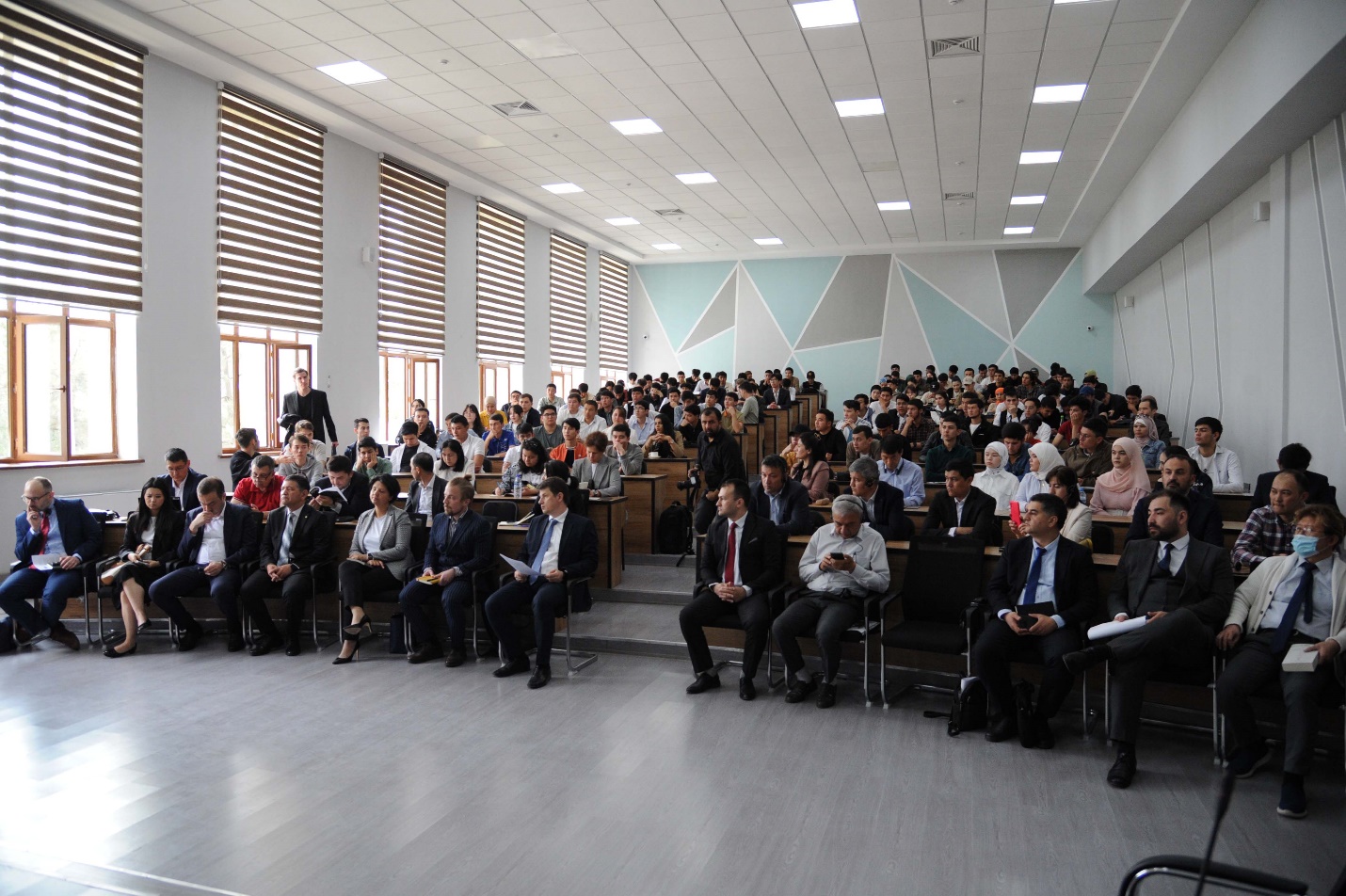
H2-diplo successfully hosted a thought-provoking panel discussion on April 30, 2024, in Tashkent at Ajou University, bringing together perspectives from Kazakhstan and Uzbekistan.
Under the frame of the traveling exhibition “Energy in Transition – Powering Tomorrow,” of the German Federal Foreign Office, our event brought together a diverse lineup of panelists representing the Ministries of Energy of Uzbekistan and Kazakhstan, the Agency for Innovative Development of Uzbekistan, the Hydrogen Diplomacy Office Astana GIZ, USAID, and UNECE.
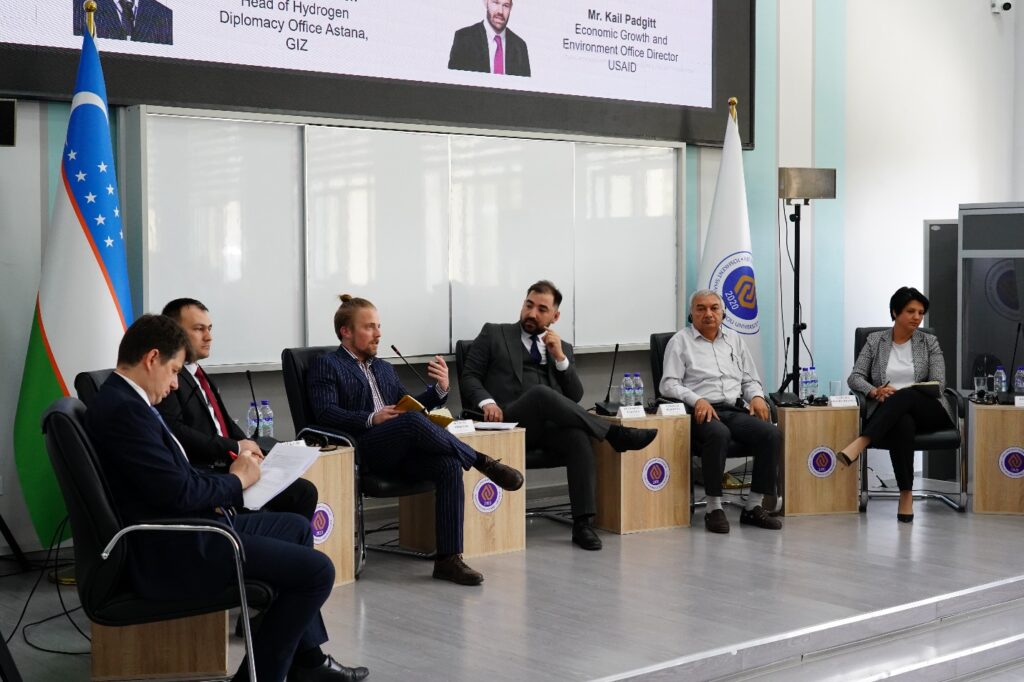
The auditorium was alive with excitement as experts, faculty and students united to delve into the role of green hydrogen in decarbonizing the economy of Uzbekistan, learning about its potential to drive sustainable development and foster a transition towards a low-carbon future.
Throughout the discussion, Mr. Asadov from the Ministry of Energy of Uzbekistan delineated the ministry’s strategic vision and ongoing efforts directed towards the development of Uzbekistan’s green hydrogen industry. Mr. Toksaba, representing the Ministry of Energy of Kazakhstan, provided valuable insights into Kazakhstan’s parallel endeavors in this realm. Meanwhile, Mrs. Khamrakulova offered an international perspective, shedding light on global initiatives promoting green hydrogen.
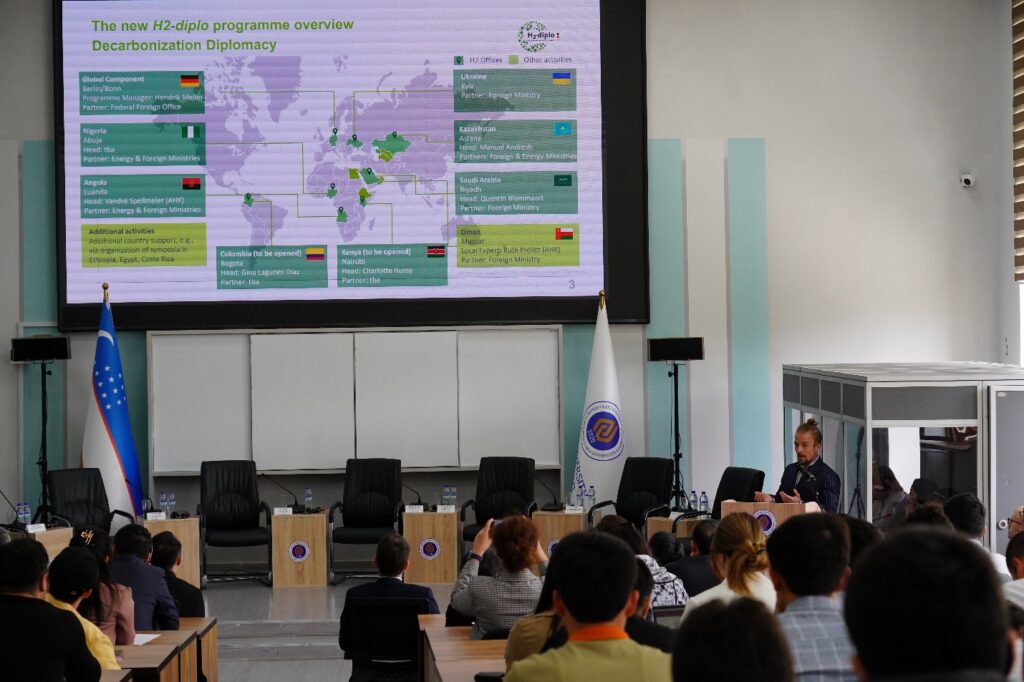
Furthermore, Mr. Isaev articulated his agency’s pivotal role in fostering innovations for renewable energy and green hydrogen, whereas Mr. Andresh elucidated examples of industries where green hydrogen and its derivatives could effectively decarbonize processes. Additionally, he gave an overview of the supporting measures by the Hydrogen Diplomacy Office Astana for Kazakhstan and other Central Asian countries. Mr. Pidgett from USAID shared their agency’s comprehensive support for green hydrogen and renewable energy initiatives across Central Asia, with a specific focus on Uzbekistan. During the panel discussion, our esteemed panelists delved into the challenges and complexities of market development, the need for supportive policies and incentives. Moreover, the panelists emphasized the current high prices for green hydrogen as a significant barrier to widespread adoption.
In addition to market challenges, the panelists addressed the importance of developing a robust regulatory framework to support the growth of the green hydrogen sector. They underscored the need for clear and consistent regulations that provide certainty for investors, facilitate market entry for new players, and ensure safety and environmental sustainability.
Overall, these discussions shed light on the multifaceted nature of the challenges facing the green hydrogen industry and underscored the importance of concerted efforts from policymakers, industry stakeholders, and researchers to overcome these obstacles and unlock the full potential of green hydrogen as a clean and sustainable energy solution.
We extend our heartfelt gratitude to all our panelists, attendees, and supporters for making this event a resounding success! Stay tuned for more updates and future events.