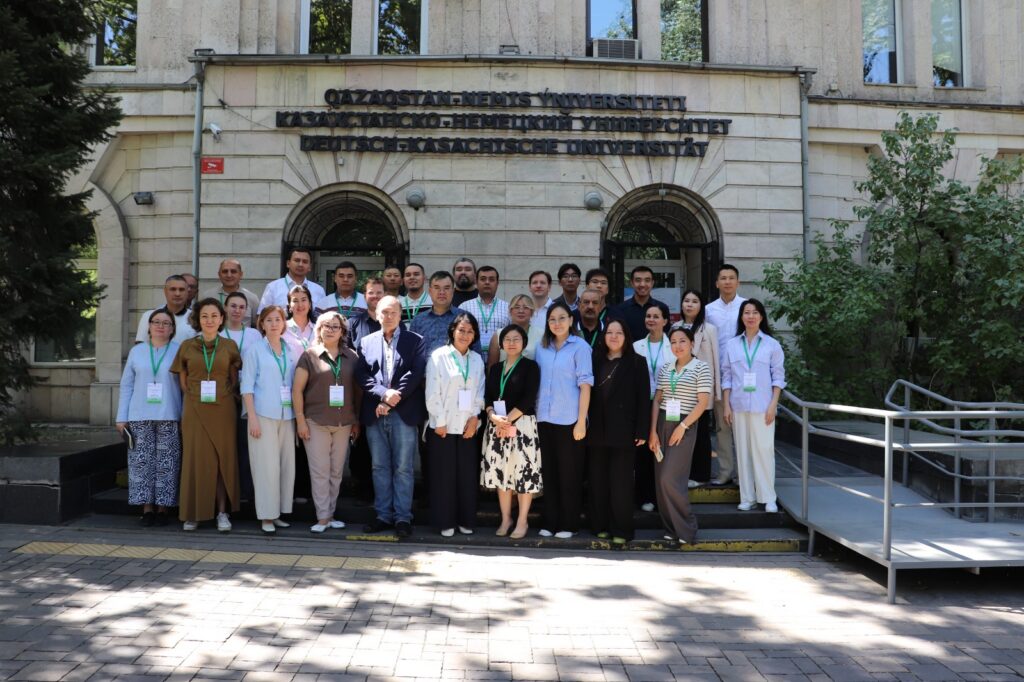
From August 25 to 29, 2025, an intensive five-day training was held in Almaty for University Educators from Kazakhstan, Tajikistan, Turkmenistan, and Uzbekistan. The goal of the training was to strengthen the capacity of regional universities and equip lecturers with knowledge and practical skills to integrate modules on green hydrogen and Power-to-X technologies into academic programmes.
The training answered an imminent strategic need: With Kazakhstan’s ambition to become a regional leader in renewable energy and sustainable technologies and given the strategic importance of countries in Central Asia, there is a growing demand for knowledgeable professionals capable of driving the adoption and implementation of green hydrogen initiatives. By developing a strong foundation of trainers in the hydrogen sector, Central Asian countries can ensure the seamless transfer of knowledge to the next generation of students, engineers, and professionals seeking to participate in the emerging green hydrogen industry.
By equipping university professors and instructors with the necessary expertise, the training aimed to empower them to act as multipliers of knowledge, further teaching hydrogen-related studies at universities and educational institutions across Central Asia.
The training programme offered a diverse programme of impulses and learning opportunities. A highlight were the insightful lectures by international expert Dr.-Ing. Sebastian Timmerberg, Professor at Hamburg University of Applied Sciences (HAW Hamburg) and the Competence Centre for Renewable Energies and Energy Efficiency (CC4E). These learning sessions were complemented with interactive sessions and teamwork where participants formed groups and developed proposals for student courses in their universities.
The programme also included field trips to renewable energy facilities which left especially strong impressions. First, the participants visited a 2 MW solar power plant with a sun-tracking system in Konaev, where plant manager Mr. Manat Zhakitov gave a detailed presentation on its operation. They also visited the Kapchagay Hydroelectric Power Plant, where chief engineer Mr. Maxim Mamyrin guided the participants through the facility and demonstrated the clean energy generation process.
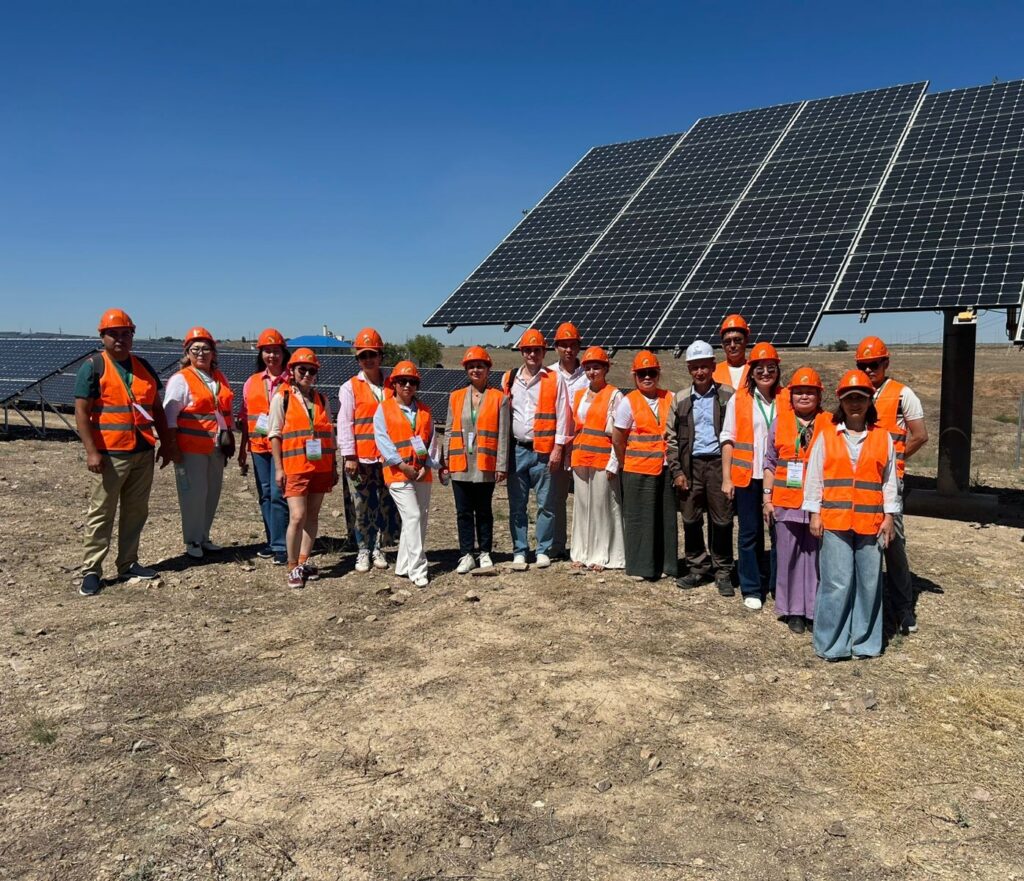
These visits allowed participants to see renewable energy projects in action, discuss technical aspects, and explore the prospects for green energy development in Central Asia. At the end of the training, not only did the educators received certificates, also an agreement was reached to continue cooperation and jointly discuss the integration of a hydrogen energy course into the academic programmes of the region’s universities.
For more news about the H2-diplo activities, follow us on LinkedIn: H2-diplo – Decarbonization Diplomacy | LinkedIn.