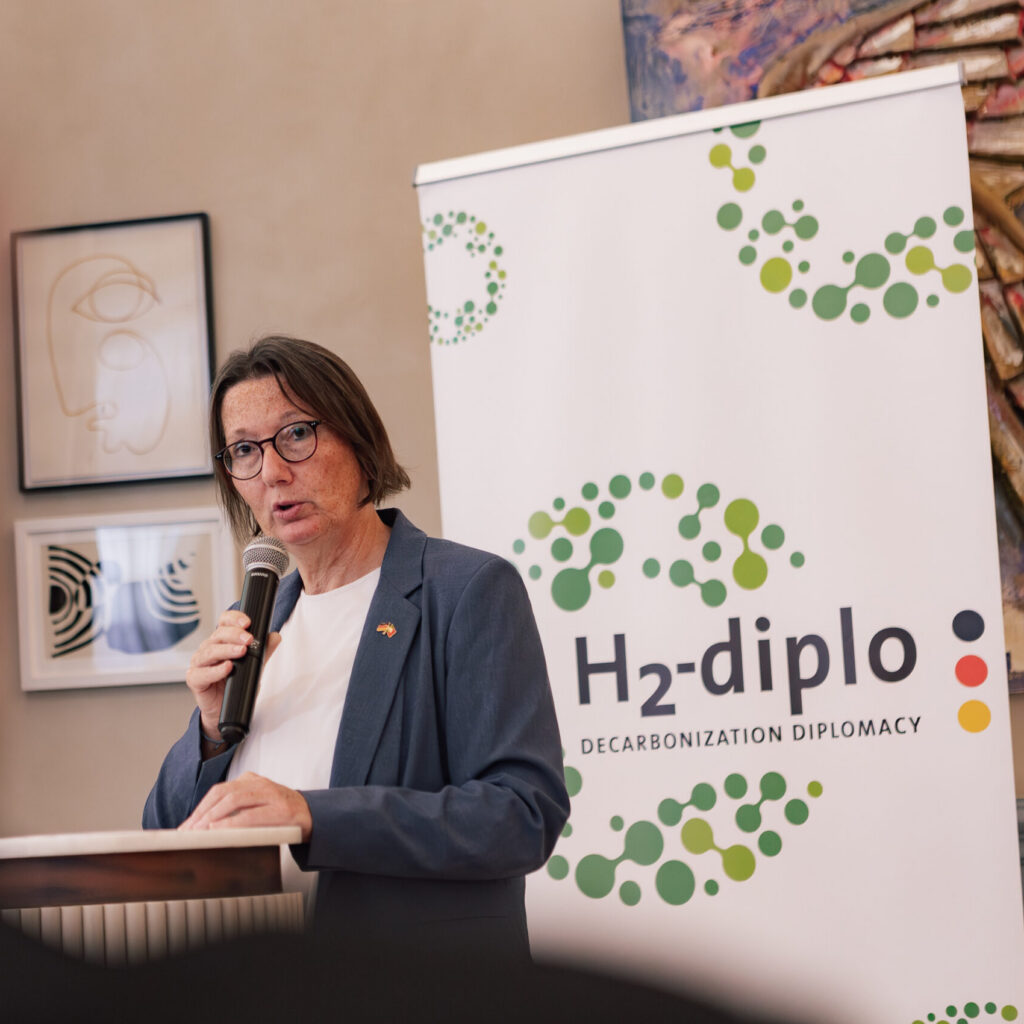
Opening remarks by H.E. Daniela Schlegel, German Ambassador to Portugal, focused on the increasing interlinkage between energy policy and geopolitical security. Strong emphasis was placed on hydrogen as a cornerstone of Germany’s and Europe’s Energiewende and industrial decarbonisation strategies. Besides its 2030 targets of domestic electrolysis capacity, Germany will be dependent on future hydrogen imports, positioning Portugal as an “ideal partner” due to its renewable potential, geographic location, and infrastructure assets. She framed German-Portuguese cooperation thereby as key element for a resilient European hydrogen market.
In his keynote, Mikaa Blugeon-Mered (Canada Research Chair in Clean Hydrogen) highlighted that the hydrogen transition is entering a decisive scale-up phase. Far from stagnating, global hydrogen investments have already reached record levels, driven in part by rising geopolitical tensions and the search for resilient, diversified energy systems. Hydrogen, he argued, must be understood not only as an energy carrier but as a “total social fact” shaping economic systems, geopolitical relations, and industrial strategies. While Europe currently remains a key player, faster decision-making and stronger coordination will be essential to keep pace with global frontrunners such as China and Saudi Arabia. Portugal, in this context, is already part of the “first wave” of competitive emerging hydrogen markets, with strong potential as both, a production hub and an export gateway.
The first panel discussion centred on the gap between potential and commercially viable hydrogen projects in Portugal, with a strong focus on demand creation, industrial value chains, and policy alignment.
Paulo Partidário (DGEG) described hydrogen as a “game changer” for Portugal’s decarbonisation strategy, highlighting the country’s ambition to significantly expand renewables and scale up Power-to-X applications. Artur Patuleia (E3G) emphasised that Portugal’s business case rests on both domestic industrial decarbonisation and export potential, calling for stronger European industrial policy instruments such as the Industrial Accelerator Act to scale up investment and for the creation of lead markets, for instance for green iron.
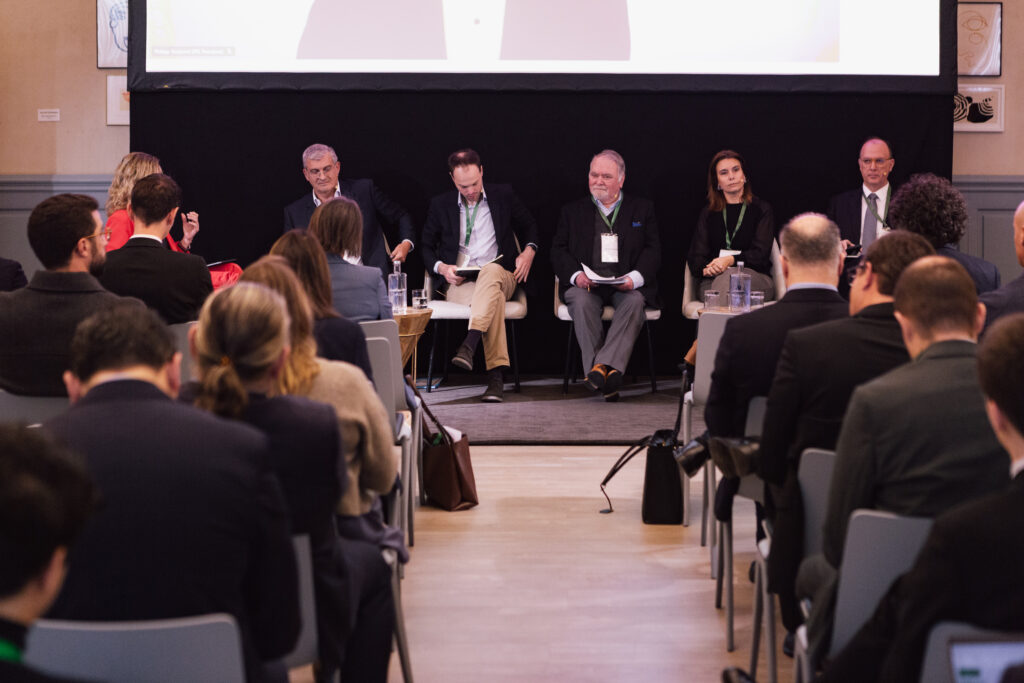
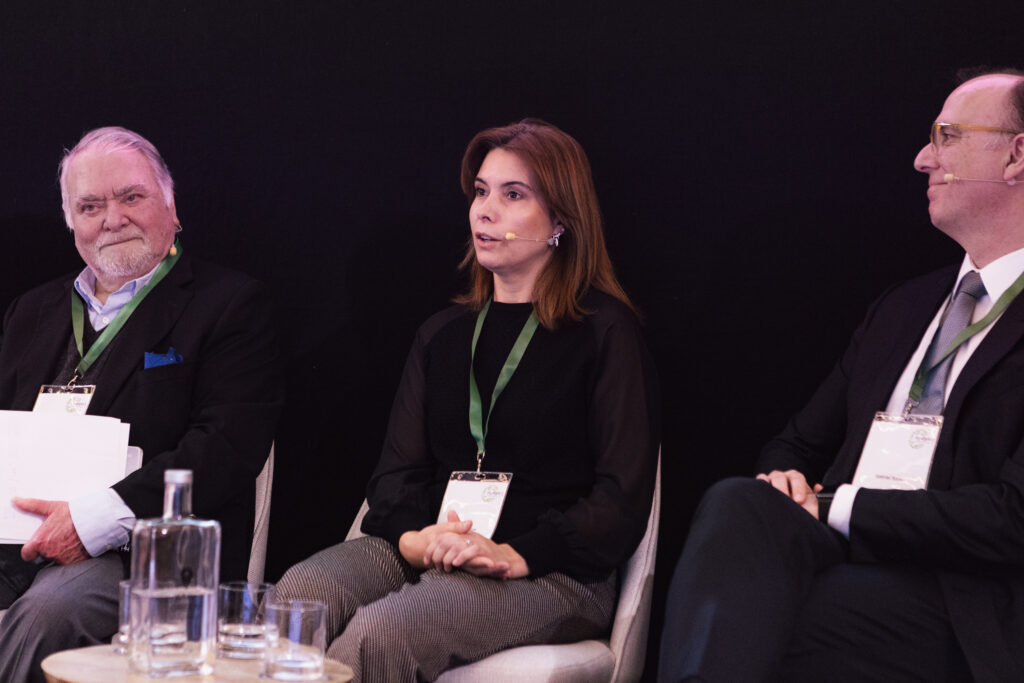
Gabriel Sousa (Floene Energias) explained that the country’s gas infrastructure is largely hydrogen-ready and technically viable, but warned of a persistent “chicken-and-egg” problem between supply and demand, advocating for mandatory demand-side measures. Philipp Verpoort (PIK Potsdam) broadened the perspective of the panel by highlighting that hydrogen will reshape future value chains, raising the strategic question of whether European countries should import hydrogen or rather hydrogen-based products, and warning against overhyping hydrogen without clear prioritisation of applications.
The second panel focused on hydrogen as an element of geopolitical strategy and industrial policy, with emphasis on implementation gaps, regulatory clarity, and Europe’s global positioning.
In this sense, keynote speaker Mikaa Blugeon-Mered called for a shift from target-setting to accountability and robust regulatory frameworks. Further, he expressed scepticism regarding pipeline timelines such as for H2Med and therefore called for a stronger role for maritime shipping of hydrogen derivatives. Laima Eicke (RIFS Potsdam) framed energy sovereignty in the hydrogen context as the management of interdependencies and called for a closer integration of industrial and energy policy and the development of certain “Made in EU” criteria.
Jaime Puna (Port of Sines) highlighted port infrastructure as a central enabler for ammonia production and export, with first large-scale export potential around 2029 and the EU ETS as a key market driver. Alexander Garbar (Duisport) pointed to the strategic importance of green shipping corridors, linking, for example, Sines with Northern European hubs, and stressed persistent regulatory uncertainty and weak investment incentives as the main challenges to overcome in ramping up a hydrogen economy in Europe.
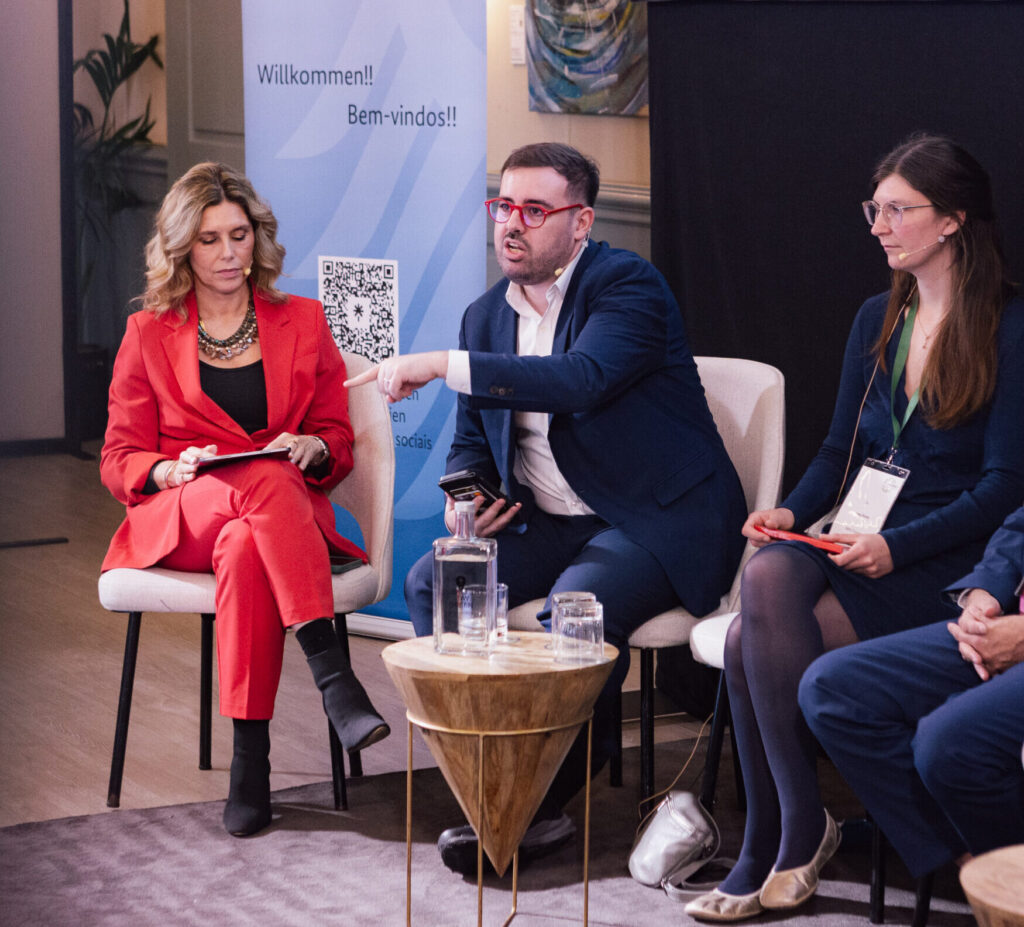
For more news about the H2-diplo activities, follow us on LinkedIn: H2-diplo – Decarbonization Diplomacy | LinkedIn.
Photo credits: Tim Peckert